If your cruiser won’t turn over and the dash lights are dead, you need to know how to jump-start a cruiser without frying the ECU before you touch jumper cables. A dead battery is a common roadside problem, but modern motorcycles are far more sensitive than old kick-start machines. Connecting cables in the wrong order or borrowing a running car can send a destructive voltage spike through the bike’s wiring.
A healthy 12-volt motorcycle battery sits at roughly 12.6 volts when at rest, and the Electronic Control Unit (ECU) expects a stable supply within a narrow range. Manufacturer owner manuals specify the exact battery type, cranking amps and charging voltage for each model. Those documents remain the definitive guide for your bike.
Quick Answer
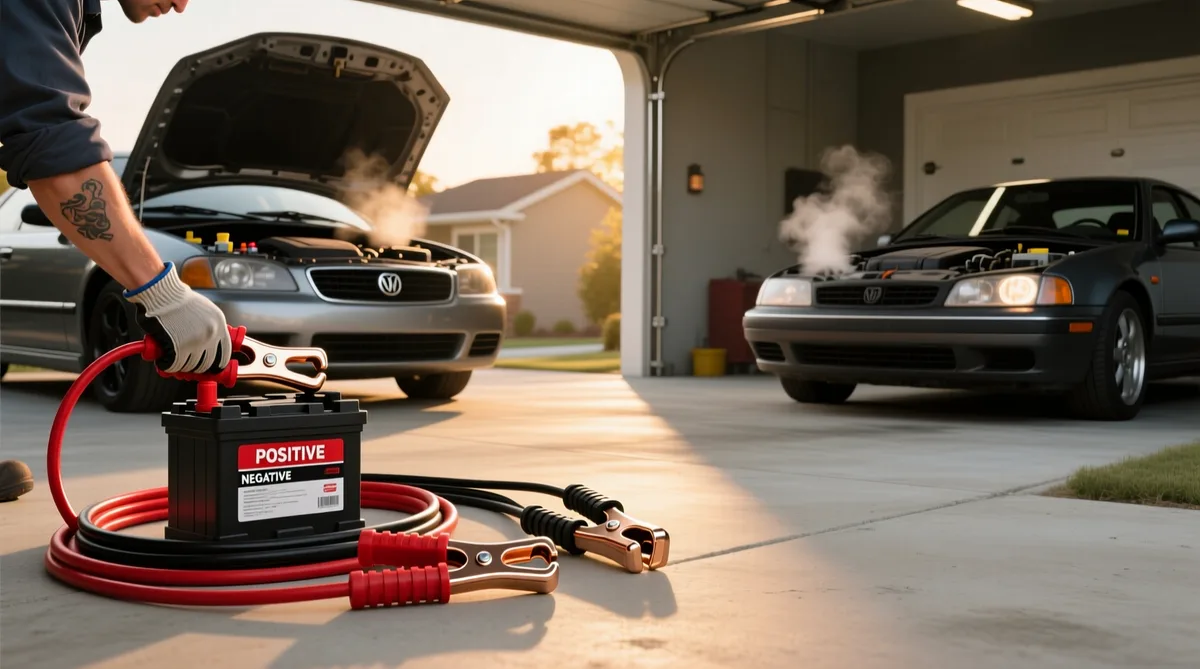
To jump-start a cruiser without frying the ECU, switch both bikes off first. Use a motorcycle jump pack or another motorcycle, never a running car. Connect positive to positive, then negative to the donor.
Attach the last negative lead to a clean frame ground. Disconnect the negative frame lead first.
Why Cruiser Electronics Make Jump-Starting Risky
A modern cruiser uses a 12-volt electrical system governed by an Electronic Control Unit (ECU), a computer that manages ignition timing, fuel injection and emissions. Cruisers often carry large lead-acid or absorbed glass mat (AGM) batteries to turn over big engines, but battery size does not mean the electronics are rugged. The ECU is a sensitive module that expects clean, stable voltage inside a narrow band.
A running car alternator can push voltage spikes well above the 12-volt baseline, and those spikes travel straight through jumper cables into the bike. Many cruisers also have complex wiring harnesses feeding lights, audio and security systems, which increases the risk of a short. Because the battery is often mounted low or under the seat, you may be working in a cramped space where a slipped clamp can easily touch metal.
A main fuse or fusible link protects the system, yet it cannot stop a fast transient from damaging semiconductors inside the ECU. According to standards bodies such as SAE International, electrical transients are a known cause of electronic module failure in vehicle systems. That combination of tight packaging and high current makes the cruiser’s electrical system unforgiving.
You cannot see the damage happening. The bike may start once, then fail days later with error codes or a dead short. That delayed failure is why so many riders think they got away with a bad jump-start, only to face a repair bill later.
The Real Dangers: ECU Damage, Shorts and Battery Hazards
A reversed clamp or a stray spark can destroy a cruiser’s ECU in milliseconds, turning a simple jump-start into a four-figure repair. The risks fall into a few clear categories, and every one of them is avoidable with the right sequence.
- Reverse polarity: connecting positive to negative sends current backward through the ECU and can kill it instantly.
- Voltage spike: a running car’s alternator produces a higher and less stable output than a motorcycle charging system.
- Short circuits: a loose negative clamp touching the frame or engine while the positive is connected creates a direct short.
- Battery explosion: a spark near a charging lead-acid battery can ignite hydrogen gas and cause an explosion.
- Acid and fire: damaged cables or a cracked battery case can leak acid or start a fire.
- Lithium hazards: if your cruiser uses a lithium battery, incorrect jump or charge methods can cause thermal runaway.
A short circuit is the most common way riders fry electronics. If the negative clamp touches metal while the positive is already attached, current bypasses the battery and flows through the frame. That path often runs directly through the ECU ground, and the resulting heat can melt connectors or burn the wiring harness.
Even a brief touch is enough to cause damage.
The battery itself is another serious hazard. A lead-acid battery gives off hydrogen gas when it is low or charging, and a single spark near the vents can cause an explosion that sprays acid and plastic shrapnel. Older flooded batteries with visible vent caps are especially dangerous, but sealed AGM batteries can still vent under fault conditions.
If your cruiser uses a lithium battery, the risk shifts. A lithium pack that is jumped or charged outside its rated limits can swell, vent toxic fumes or enter thermal runaway. Confirm which battery chemistry your cruiser uses before you attempt any boost.
The official vehicle safety regulator in your jurisdiction may publish additional guidance on hazardous battery handling, so check local rules if you are unsure.
How to Jump-Start a Cruiser Without Frying the ECU: Step-by-Step
Start by switching both motorcycles off and removing the keys. The engine stop switch should be in the off position so nothing energises while you work. Inspect the dead battery for cracks, leaks or heavy corrosion, and wipe the terminals clean if they are dirty.
Locate a solid, unpainted metal bolt on the frame or engine case to use as a ground point. Keep it well away from the battery vents to avoid any spark near hydrogen gas. You will need jumper cables or a jump pack, a clean rag, and basic eye and hand protection.
| Item | Purpose |
|---|---|
| Jumper cables or jump pack | Transfer power from donor |
| Clean rag or wire brush | Remove terminal corrosion |
| Multimeter (optional) | Verify voltage after start |
| Gloves and eye protection | Shield against acid and sparks |
- Switch both bikes off and remove the keys.
- Set the engine stop switch to off.
- Inspect the dead battery for cracks, leaks or corrosion.
- Wipe the terminals clean if they are dirty.
- Find a solid, unpainted frame or engine bolt away from the battery vents.
- Connect the positive clamp to the positive terminal on the dead cruiser.
- Attach the other positive clamp to the donor or jump pack.
- Connect the negative clamp to the donor.
- Clamp the remaining negative lead to the clean frame ground.
- Start the donor and let it idle, or switch on the jump pack.
- Try to start the cruiser for no more than five seconds.
- Once it fires, remove the negative clamp from the frame ground first.
- Remove the negative clamp from the donor, then the positive clamps.
- Let the bike idle for several minutes before you ride.
Once the engine fires, remove the negative clamp from the frame ground first. Then remove the negative clamp from the donor, followed by the positive clamps. Let the bike idle for several minutes so the charging system can build some charge before you ride.
Remember that this sequence is general guidance. Your manufacturer owner manual remains the final word for your specific cruiser, and it may include model-specific warnings or reset steps that override generic advice.
Comparing Jump Methods: Jumper Cables, Portable Jump Packs and Donor Bikes
| Method | Best For | Risk Level | Notes |
|---|---|---|---|
| Motorcycle jumper cables | Riders with a second bike nearby | Low if done correctly | Requires a donor bike and correct ground point |
| Portable lithium jump pack | Solo riders and roadside recovery | Lowest | No second vehicle needed; many include reverse polarity protection |
| Running car donor | Not recommended | High | Alternator output can spike the motorcycle ECU |
| Smart charger | Home recovery | Very low | Too slow for roadside; needs mains power |
Cables and another motorcycle remain the traditional method. You get plenty of cranking power from a healthy bike, and you avoid the car alternator problem entirely. The downside is that you need a second machine nearby and a set of decent-quality leads.
Cheap thin cables can overheat and drop voltage, which stresses both batteries.
Portable jump packs have changed roadside recovery for solo riders. Modern lithium packs are compact, hold charge for months and often include spark-proof clamps. Look for a unit rated for motorcycle engines, not just small car engines, because cruisers need high cold cranking amps.
The best packs shut down automatically if you reverse the clamps, which adds a layer of protection for the ECU.
Using a running car as a donor is the method to avoid. A car charging system is designed for a much larger battery and electrical load, and its regulator can deliver transient spikes that a motorcycle ECU cannot tolerate. If you have no other option, switch the car engine off before connecting, then treat it as a static battery only.
Never leave the car running while the motorcycle starts.
Smart chargers are ideal at home or in a garage. They recover a flat battery slowly and safely, often with desulfation modes for lead-acid packs. They are useless on the roadside because they need mains power and take hours rather than seconds.
After the Engine Fires: Verifying the Charging System and Battery Condition
A jump-started cruiser is not out of the woods until you confirm the charging system is actually working. The battery may have enough power to crank the engine once, but that does not mean it will hold a charge or that the stator and regulator/rectifier are healthy.
Let the engine idle for at least ten to fifteen minutes before you switch anything on. This gives the stator and regulator/rectifier time to push current back into the battery. If you have a multimeter, set it to DC volts and check the battery terminals.
Many 12-volt systems read between 13.5 and 14.5 volts at idle, but manufacturer specifications vary by model.
Check your owner manual for the exact acceptable range. If the reading stays near 12.6 volts or drops, the charging system is not doing its job and the battery will flatten again. A battery that was deeply discharged may never fully recover.
Lead-acid batteries suffer permanent damage when they sit at very low state of charge for long periods.
If your cruiser is more than a few years old and this was not the first flat battery, treat it as a candidate for replacement. Do not assume the jump-start fixed the problem. A parasitic drain from an alarm, GPS or audio accessory can kill a good battery overnight.
If the battery fails to hold voltage after a full charge, investigate the drain before you buy another battery.
Preventing the Next Flat Battery: Storage, Parasitic Drain and Battery Choice
The cheapest battery is the one that never dies, and prevention starts with how you store and maintain it. Cruisers often sit unused for weeks in winter, and that inactivity is the leading cause of dead batteries. If you store the bike for more than a few weeks, disconnect the negative terminal or fit a smart battery tender.
A tender keeps the battery at optimal voltage without overcharging, which protects both lead-acid and AGM packs. Never leave the bike on an unmanaged charger because that can cook the cells. Parasitic drain is the other common killer.
Clocks, alarms, aftermarket audio and GPS units all pull small amounts of current even when the ignition is off.
Individually they seem minor, but together they can flatten a battery in days. Choose your replacement battery carefully. Manufacturer specifications list the required cold cranking amps and amp-hour capacity for your model, and those figures are not optional.
A battery with too little capacity will strain the starter motor and leave you stranded more often.
Climate matters too. Cold weather reduces a lead-acid battery’s effective capacity, while sustained heat shortens its overall life. If you ride in extreme conditions, inspect the terminals for corrosion every month and keep them tight.
When to Stop and Call a Professional Instead
Sometimes the safest repair is the one you do not attempt, and knowing when to call for help protects both you and your ECU. Jump-starting is not always the right answer, even when the battery looks dead. Never connect cables to a battery that is swollen, cracked, leaking or unusually hot.
Those are signs of internal damage or thermal runaway, and a lithium pack in that state can catch fire.
Damaged terminals or melted cable insulation also mean you should stop. A short may already have occurred, and another attempt could finish the job on your wiring harness. If the terminals are too corroded to clean, or if the cables feel hot during a previous attempt, leave it alone.
Bikes with recent ECU error codes, aftermarket alarm systems or complex accessory wiring deserve extra caution. A jump-start may mask a deeper electrical fault that a dealer or qualified mechanic needs to trace. Many official insurers include roadside recovery or battery assistance as part of their policy, so check your coverage before you pay out of pocket.
If you are unsure about the battery chemistry or the manufacturer recommended procedure, do not guess. The official vehicle safety regulator in your jurisdiction may publish guidance on hazardous battery handling, and your local dealer can confirm the correct approach for your specific cruiser.
Cruiser Jump-Starting FAQs
Can I jump-start my cruiser with a running car?
No. A running car alternator produces higher and less stable voltage than a motorcycle system. That can send a spike through the bike and damage the ECU.
If a car is your only option, switch the engine off before connecting and treat it as a static battery.
Is it safe to connect the negative cable to the battery terminal?
No. Connecting negative to the battery terminal on the dead bike risks a spark near hydrogen gas. It can also send current through the frame in an uncontrolled way.
Always use a clean, unpainted frame or engine ground point away from the battery vents.
How long should I let the bike idle after a jump-start?
Let it idle for at least ten to fifteen minutes. This gives the stator and regulator/rectifier time to recharge the battery. Do not switch on lights or accessories during this period because that loads the charging system.
Can I use a car battery as a donor?
Yes, but only with the engine off. A static car battery can provide cranking power, but the running alternator is the danger. Connect positive to positive and negative to a clean frame ground, just as you would with a motorcycle donor.
What if my cruiser has a lithium battery?
Check the manufacturer owner manual before attempting any boost. Lithium packs need specific jump and charge protocols. Some require a special activation voltage or have strict temperature limits.
Using the wrong method can cause thermal runaway.
How do I know if my ECU is damaged after a bad jump?
Watch for error codes, stalling, misfires or a bike that starts once and then dies. A damaged ECU may not fail immediately. If you suspect damage, take the bike to a dealer or qualified mechanic with diagnostic tools.