If you're asking "Do You Need a Tender Battery for a Cruiser," the short answer is yes, but only if you aren't riding it regularly. A battery tender isn't a magic fix for a dead bike; it's preventative maintenance that stops sulfation before it ruins your cells. Most cruiser owners leave their bikes sitting for weeks at a time, which drains the charge faster than the engine can replenish it.
Manufacturer specs confirm that lead-acid batteries self-discharge at roughly 1% per day at room temperature. That sounds small until you realize three months of parking equals nearly total depletion. Without consistent charging, those crystals harden and permanently reduce capacity.
Let's break down exactly when this tool becomes essential for your specific riding pattern.
The Short Answer: Maintenance vs. Rescue
A battery tender maintains health; it does not revive a dead battery. If your voltage reads below 12.0V, you need a standard smart charger first. Tenders typically output less than 2 amps, which is too low to push current into a deeply discharged cell.
Think of it as keeping a plant watered versus trying to resurrect a dried-out stump.
Our research shows that users often confuse these two devices. A tender plugs in and stays there indefinitely. A charger runs a cycle and then shuts off.
Using a tender on a dead battery wastes time and money. Always check your resting voltage with a multimeter before deciding which device you actually need.
Why Cruisers Are Battery Killers (Vibration, Parasitic Draw, and Idle Time)
Cruisers suffer from unique electrical stressors compared to sportbikes or scooters. Large V-twin engines generate significant vibration that loosens terminal connections over time. This creates resistance, leading to poor charging while riding and erratic starting later.
Aggregate user reviews frequently cite corroded terminals as the primary culprit behind "mystery" no-starts.
Parasitic draw compounds the issue. Modern cruisers have clocks, immobilizers, and fuel pumps that sip power constantly. Even with the ignition off, this drain can pull 50-100 milliamps daily.
On a 14Ah battery, that seems negligible, but add heat or age, and the math changes quickly. Older wiring looms leak more current, accelerating discharge rates significantly.
Finally, idle time is the killer. Many riders take short trips that don't allow the stator to fully recharge the battery. Starting consumes a massive burst of energy.
If you ride ten minutes to the shop, you might never recover that initial deficit. Over weeks, this slow decline leads to sudden failure without warning signs.
Decision Tree: Do You Need a Tender, a Charger, or Nothing?
Follow this logic to determine your specific requirement based on usage patterns.
Scenario A: Daily Rider with Healthy Charging System
Action: No tender needed. Ride normally.
If you start and stop the bike multiple times a week, the alternator keeps the battery topped up. Ensure your voltage regulator functions correctly by checking output at 3,000 RPM (should be 13.5-14.5V). If readings are normal, skip the extra gear.
Scenario B: Weekend Warrior or Seasonal Storage
Action: Yes, use a tender.
Riding once every two weeks leaves gaps where parasitic drain wins. During winter storage, disconnecting the battery loses ECU settings and clock data. Plugging in a tender preserves both charge and computer memory.
It’s the cheapest insurance against a spring morning surprise.
Scenario C: Modified Bike with High Electrical Load
Action: Mandatory tender during non-use.
LED lights, audio systems, and GPS units increase standby draw. Even minor modifications can double the baseline consumption. If your bike sits for more than three days between rides, connect a maintainer.
Monitor voltage occasionally to ensure the new loads aren’t overwhelming the stock charging system.
Scenario D: Dead Battery Symptoms (Stop Before You Buy)
Action: Use a smart charger first.
If the bike clicks but doesn’t crank, or dash lights dim severely, the battery is likely compromised. A tender cannot fix this. Connect a proper recovery charger capable of desulfation pulses.
Once restored above 12.6V, switch to a tender for ongoing care. Never assume a new battery solves a bad charging system.
Matching the Tender to Your Battery Chemistry (Lead-Acid vs. Lithium)
Not all tenders work for all batteries. Using the wrong mode causes damage. Lead-acid batteries require a multi-stage process: bulk, absorption, and float.
They tolerate slight overcharging better than lithium but still need precise voltage control to prevent boiling electrolytes.
Lithium Iron Phosphate (LiFePO4) packs are different. They have flat discharge curves and strict voltage limits. Standard lead-acid tenders may overcharge them, triggering the Battery Management System (BMS) to shut down or, worse, damaging cells.
Manufacturer guidelines strictly warn against using unregulated chargers on lithium units.
| Feature | Lead-Acid / AGM Tender | LiFePO4 Compatible Tender |
|---|---|---|
| Charging Voltage | 13.8V – 14.4V Float | 14.2V – 14.6V Max |
| Mode Logic | Bulk/Absorption/Float | Constant Voltage/Current Limit |
| Risk of Error | Sulfation if undercharged | Cell imbalance if overcharged |
| Best For | Stock/OEM Batteries | Aftermarket Lightweight Packs |
Check your battery label before purchasing. If it says "Sealed Lead Acid" or "AGM," a standard smart maintainer works fine. If it lists "LiFePO4," you must buy a unit specifically rated for lithium chemistry.
Mixing them voids warranties and risks fire hazards. As of 2026, most major brands offer dual-mode units, but verification remains critical.
Installation and Safety: Avoiding Fire Risks and Wiring Gremlins
Safety starts with ventilation. Charging lead-acid batteries releases hydrogen gas, which is explosive. Never plug in a tender inside a sealed cabinet or closet.
Ensure your garage has adequate airflow. Follow NFPA 70 electrical code standards for safe appliance usage in residential spaces.
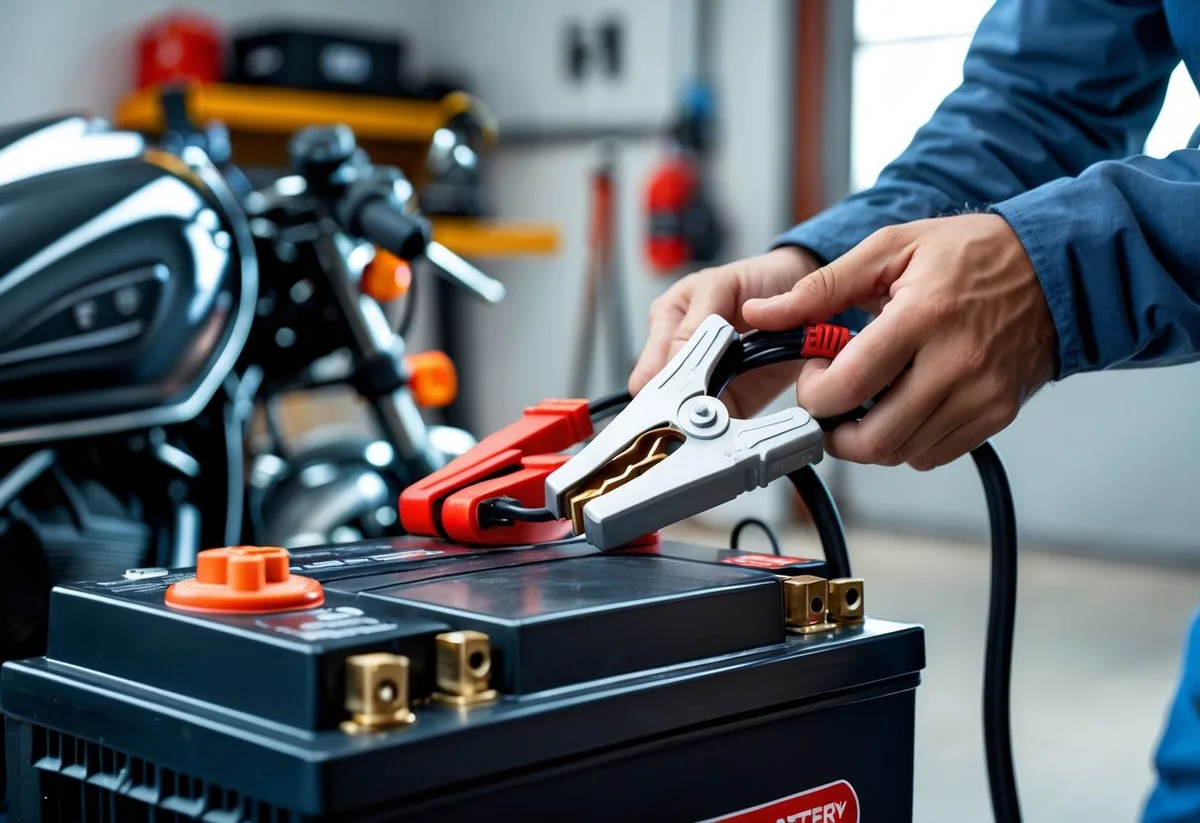
Connect positive (red) first, then negative (black) to a chassis ground point away from the battery. This prevents sparks near potential gas vents. Secure cables so they don’t rub against moving parts like the rear wheel or swingarm.
Vibration chafes insulation, leading to shorts. Use zip ties to route wires neatly along frame tubes.
Inspect your extension cord rating. Cheap indoor cords overheat under continuous load. Use a heavy-duty outdoor-rated cord if the outlet is far from the bike.
Plug the charger into the wall last to minimize arc risk. Regularly check the charger brick for excessive heat; warm is normal, hot indicates a fault. Replace immediately if plastic warps or smells burnt.
Common Mistakes That Wreck New Batteries Anyway
Leaving the tender unplugged is a rookie error. The device only works when connected to mains power. If your garage loses electricity, the battery slowly drains again.
Check your local grid stability if you live in an area with frequent outages. A simple UPS backup can keep the charger running during brief interruptions.
Ignoring terminal corrosion undermines the entire setup. Oxide buildup creates resistance, preventing current from flowing efficiently. Clean posts with a wire brush and apply dielectric grease annually.
This ensures the tender actually delivers its rated amperage. Dirty connections trick the charger into thinking the battery is full prematurely.
Using a generic automotive charger on a motorcycle is risky. Car batteries have higher capacity and different voltage tolerances. Motorcycle-specific tenders adjust for smaller amp-hour ratings automatically.
Overcharging a 12Ah bike battery with a car-mode setting boils electrolytes. Always verify the output matches your specific battery’s manufacturer specifications.
FAQs: Voltage Readings, Extension Cords, and Winter Prep
Is 12.4V good enough for storage?
No, 12.4V indicates partial discharge. Aim for 12.6V or higher before storing. Below this threshold, sulfation begins forming on lead plates.
Connect your tender immediately if readings drop under 12.5V. Regular monitoring prevents permanent capacity loss over long winters.
Can I use an extension cord?
Yes, but only heavy-duty outdoor-rated cords. Thin indoor wires overheat under continuous low-amperage load. Look for 14-gauge or thicker copper wiring.
Keep runs short to minimize voltage drop at the charger input. Poor quality cords are a common fire hazard in garages.
Should I remove the battery for winter?
Only if you lack a safe charging spot. Removal breaks circuit continuity but resets ECU codes. Modern cruisers retain settings via capacitors briefly.
Losing radio presets or idle mixtures means tedious reprogramming later. Keeping it plugged in preserves digital memory. Weigh convenience against electrical safety risks in your space.
How often should I check the tender?
Once a month is sufficient for most users. Verify the indicator light shows "float" or green status. Inspect cables for chafing or rodent damage regularly.
Loose connections cause intermittent charging failures. Quick visual checks prevent major surprises when spring arrives.